Key takeaways
- Start with filtration and clean ducts if needed.
- Control humidity at the right level.
- Ventilate where it makes sense.
- Be wary of products with big claims and no explanation.
Source control first
The best air quality improvement is removing sources: smoking, strong chemicals, dust-making habits and moisture problems. Equipment helps with what remains.
Fix leaks and damp areas promptly.
Filtration
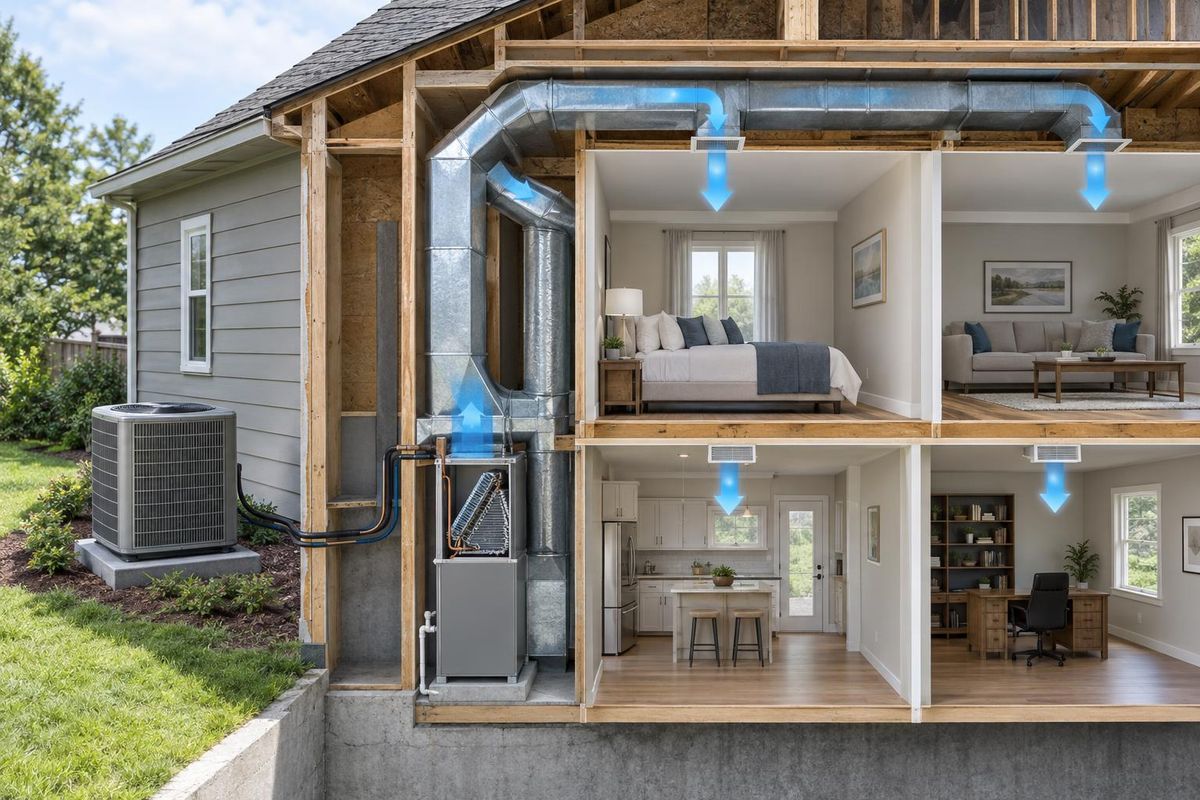
A good filter in the right place catches dust, pollen and pet dander. The best filter is the one your system can breathe through and that you change on time.
Thicker media filters often give better filtration with less restriction.
Humidity
Very high humidity encourages mold and dust mites, and very low humidity dries skin and wood. Many homes feel best between thirty and fifty percent depending on the season.
Dehumidifiers and humidifiers can help.
Ventilation and add-ons
Bath and kitchen fans move moisture and odors out. Purifiers and UV lights can help in some homes but are no substitute for the basics.
Ask for plain explanations of what any product does.
Quick answers
Will duct cleaning fix my allergies?
It can reduce dust, but filtration and humidity control often matter more.
Do I need an air purifier?
Not always. Start with a good filter and humidity control.