Key takeaways
- Strange noises, smells and short cycling are early warnings.
- Weak airflow and uneven rooms point to airflow or capacity problems.
- Water near the indoor unit and ice on lines need attention right away.
- Rising bills can mean a system is losing efficiency.
Noises and smells
Grinding, squealing, banging and buzzing are not normal. A burning smell, a musty smell or a rotten-egg smell should be taken seriously; if you smell gas, leave the home and call your gas utility first.
Many noises start small and get worse.
Performance changes
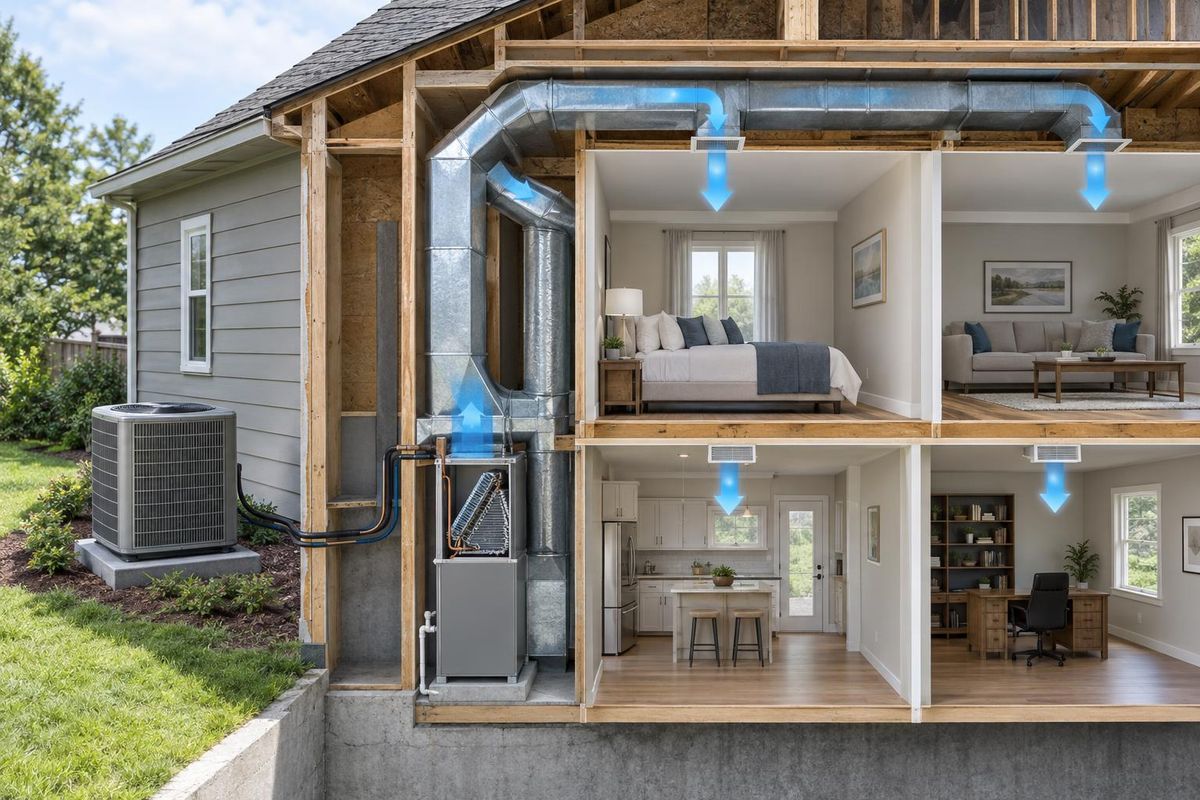
A system that runs longer than it used to, cycles on and off quickly, blows weak air or leaves rooms uneven is telling you something. These changes often mean a dirty coil, a failing part or a duct problem.
Early repair is often simpler and less expensive than waiting for a failure.
Water and ice
Water around the indoor unit usually means a clogged drain. Ice on the refrigerant lines or the indoor coil points to low airflow or low charge. Turn the system off and call.
Running a frozen system can damage the compressor.
Bills and age
A steady rise in energy bills without a change in habits suggests the system is losing efficiency. Equipment older than about a decade deserves a checkup and a plan.
A maintenance visit can catch small issues before a hot or cold spell.
Quick answers
Should I wait to see if a noise goes away?
It is best not to. Many noises mean a part is wearing and will fail.
Can I fix a frozen coil myself?
You can turn the system off to let it thaw, but the cause needs a technician.